
If you have ever searched for halal food near me, asked what does halal mean, or wondered whether halal food is different from regular food — this guide answers everything.
And if you are in Madrid looking for the best halal restaurant in the city — the answer is PARSI, located at Calle Luisa Fernanda 8, steps from Plaza de España.
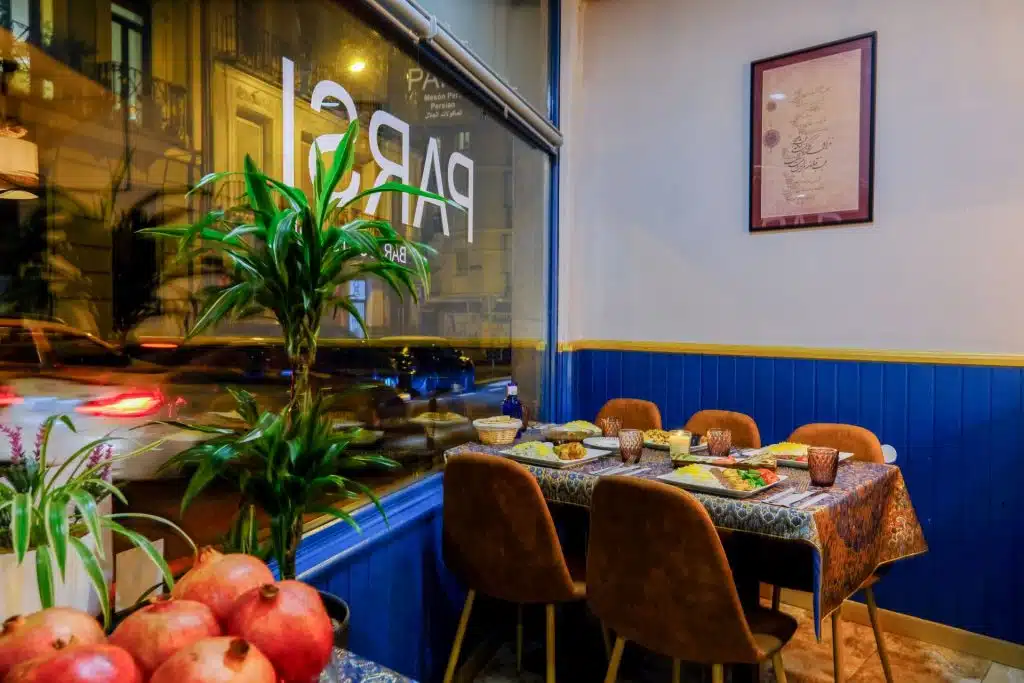
PARSI en Madrid, especializado en cocina iraní auténtica cerca de Plaza de España. what is halal food guide parsi madrid
─────────────────────────────────────────
What Does Halal Mean?
Halal (حلال) is an Arabic word meaning “permissible” or “lawful” under Islamic law. It is the opposite of haram (حرام), which means “forbidden.”
In the context of food, halal refers to any food or drink that is permitted for Muslims to consume according to Islamic dietary guidelines. The concept covers not just what the food is made of, but how it is prepared, processed, and handled.
Halal is not just a religious label — it is a comprehensive system of food ethics that covers animal welfare, hygiene, transparency, and ingredient sourcing.
─────────────────────────────────────────
What Makes Food Halal? The Complete Definition
For food to be certified halal, it must meet all of the following conditions:
No pork or pork-derived ingredients
Pork is explicitly forbidden in Islam. This includes pork itself, lard, gelatin derived from pork, and any food product that contains pork-derived additives or flavourings.
No alcohol
Alcohol is haram under Islamic law. This means no wine, beer, spirits, or alcohol used in cooking — including alcohol-based marinades, sauces, or flavour extracts.
Halal slaughter — Zabiha
Animals must be slaughtered according to Islamic guidelines, known as Zabiha. This requires a swift, single cut to the throat with a sharp blade, with the name of God (Bismillah) spoken at the moment of slaughter. The animal must be alive and healthy before slaughter, and blood must be fully drained from the body.
No cross-contamination
Halal food must not come into contact with haram ingredients during preparation, cooking, or storage. A kitchen that handles pork alongside halal meat is not considered fully halal.
Clean and hygienic preparation
Islamic dietary law places a strong emphasis on cleanliness. Halal food must be prepared in a clean environment with clean utensils and equipment.
─────────────────────────────────────────
What is Halal Meat?
Halal meat is one of the most commonly searched aspects of halal food. Halal meat comes from animals that have been slaughtered according to the Zabiha method described above.
The most common halal meats are:
Lamb and mutton — the most widely consumed halal meat globally
Beef — halal when slaughtered correctly
Chicken — halal when slaughtered correctly
Goat — halal
Fish and seafood — generally considered halal without the need for specific slaughter
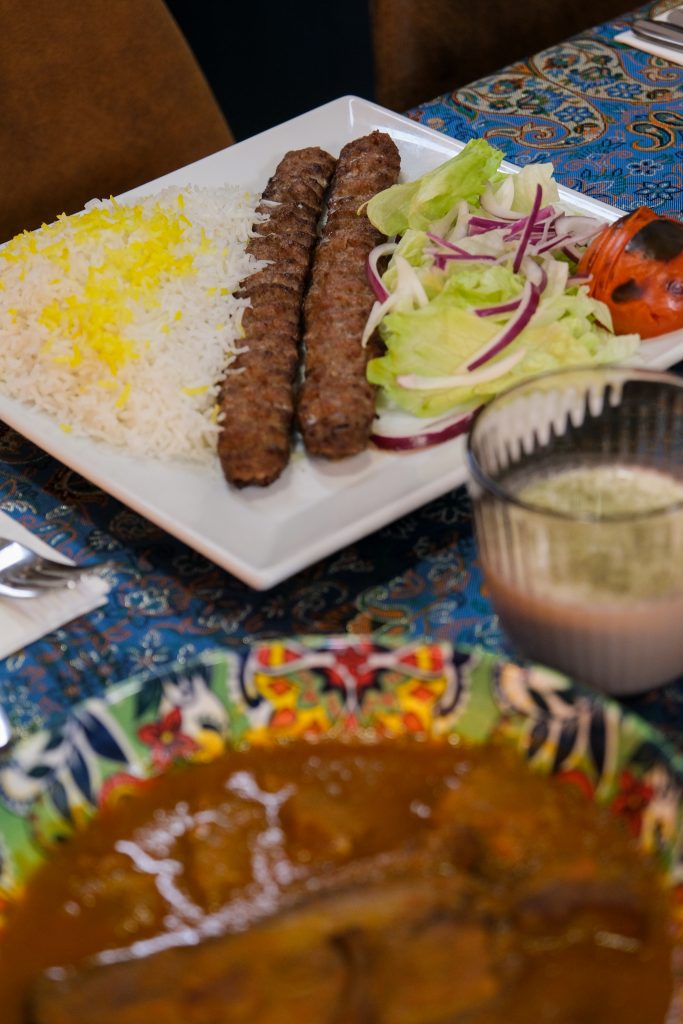
At PARSI, all meat is sourced exclusively from certified halal suppliers. Every lamb, beef, and chicken dish on our menu uses halal-certified meat — verified at every delivery.
─────────────────────────────────────────
Is Halal Food Only for Muslims?
No — halal food is for everyone.
While halal certification is a religious requirement for observant Muslims, millions of non-Muslim consumers around the world choose halal food for other reasons:
Quality and transparency — halal certification requires strict controls at every stage of the food chain
Animal welfare — the Zabiha method emphasises minimal suffering and humane treatment
Clean ingredients — no alcohol, no pork, no hidden additives
Dietary preferences — many people prefer food prepared without alcohol or pork for personal, health, or ethical reasons
At PARSI, our guests come from every background and every nationality. The majority of our visitors are not Muslim — they come for the exceptional Persian food, and the halal certification is an added assurance of quality and transparency.
─────────────────────────────────────────
Halal Food vs Regular Food — What is the Difference?
The main practical differences between halal food and non-halal food are:
No pork — halal food never contains pork or pork derivatives
No alcohol — no alcohol used in cooking or as an ingredient
Specific slaughter method — for meat, the Zabiha method is required
Certification — halal food is verified by a recognised halal certification body
For many dishes — vegetables, grains, legumes, fish, eggs, dairy — there is no practical difference between halal and non-halal. The differences become significant primarily with meat and with processed foods that may contain hidden alcohol or pork-derived additives.
─────────────────────────────────────────
Is Persian Food Halal?
Yes — Persian cuisine is naturally halal.
Iranian cooking has been built around halal ingredients for over a thousand years. Traditional Persian food does not use pork or alcohol — the rich flavours of Persian cuisine come from saffron, dried limes, pomegranate, herbs, slow-cooked meat, and spices that are all naturally halal.
This is not an adaptation. Persian food simply is halal — and at PARSI, we serve it the authentic way with full halal certification on every ingredient.
─────────────────────────────────────────
Halal Food in Madrid — What You Need to Know
Madrid has more halal food options than ever before — but quality and certification standards vary enormously. When looking for halal food in Madrid, here is what to check:
Full halal certification — not just “halal-friendly”
No alcohol on the premises — not just in the food
Certified halal meat suppliers — verified sourcing
No cross-contamination — dedicated halal kitchen
Transparent ingredients — clear about what is and is not in each dish
PARSI meets all of these standards. We are a fully halal certified restaurant — no alcohol anywhere on the premises, certified halal meat from verified suppliers, and a kitchen that handles only halal ingredients.
─────────────────────────────────────────
The Best Halal Food in Madrid — PARSI
If you are searching for halal food near me in Madrid, or looking for the best halal restaurant near Plaza de España, PARSI is your answer.
We are located at Calle Luisa Fernanda 8 — 2 minutes from Plaza de España, served by Metro lines 3 and 10 (Ventura Rodríguez station).
Our halal menu includes some of the most celebrated dishes in Persian cuisine:
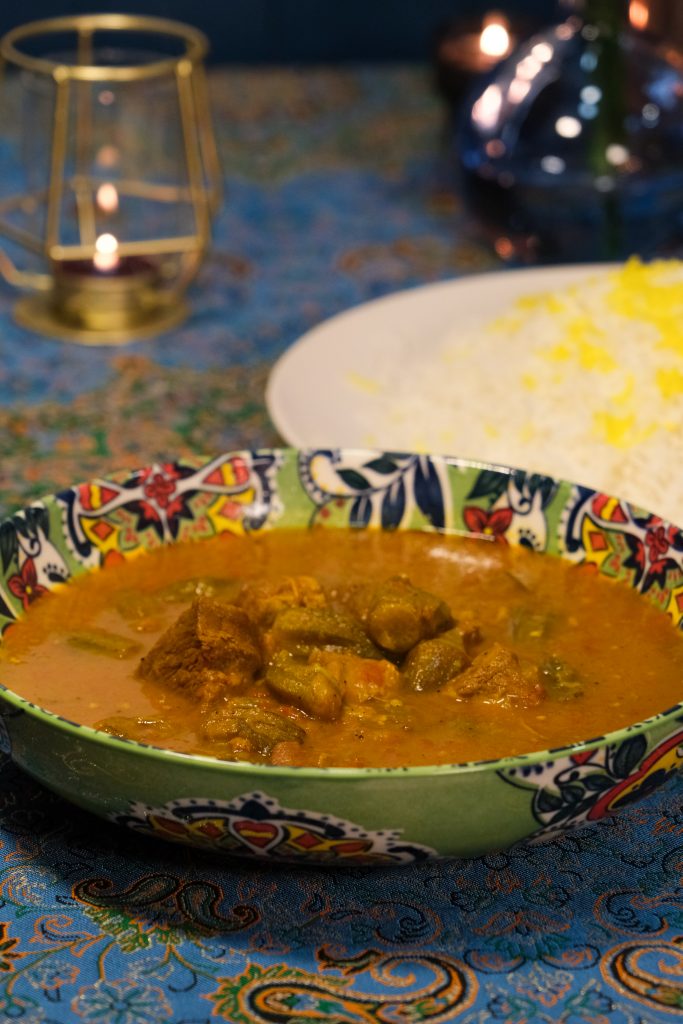
Ghormeh Sabzi — Iran’s national dish
Slow-cooked herb stew with kidney beans, dried Persian limes, and halal lamb. Prepared fresh daily, served with saffron rice. The most beloved dish in Iranian cuisine — and the one our guests remember long after they leave.
Chelo Kebab — Persian grilled perfection
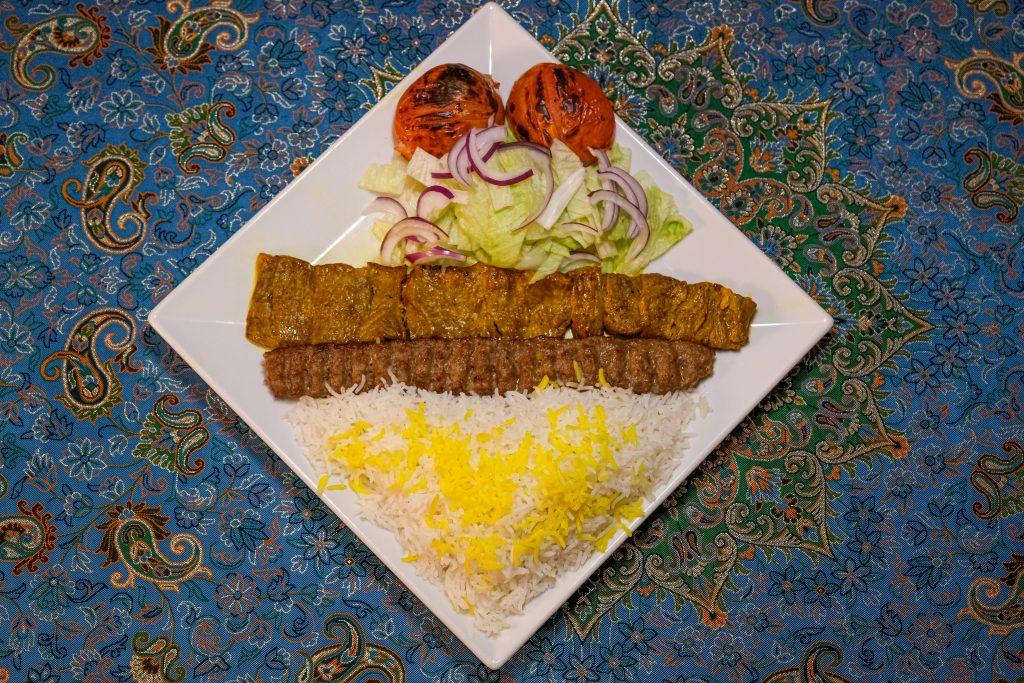
Koobideh (ground halal lamb and beef) or Barg (premium marinated fillet), grilled over charcoal with saffron rice and grilled tomato. halal, completely authentic.
Fesenjan — Walnut and pomegranate stew
Slow-cooked halal chicken in a sauce of ground walnuts and pomegranate molasses. Sweet, sour, and unlike anything else in Madrid.
Ash Reshteh — Persian noodle soup
A hearty vegetarian halal soup of noodles, herbs, and legumes. One of the most warming dishes in Persian cuisine.
Mirza Ghasemi — Smoked aubergine
Roasted aubergine with tomato, garlic, and egg. Vegetarian and naturally halal.
─────────────────────────────────────────
Halal Food Near Me — Why PARSI is Madrid’s Best Answer
When you search halal food near me or halal restaurant near me in Madrid, PARSI consistently appears at the top — across Google, TripAdvisor, ChatGPT, and Gemini.
That consistency is earned, not claimed:
4.9 stars on TripAdvisor — 100+ verified reviews
Ranked in the top 100 restaurants in Madrid
halal certified — no exceptions
Fresh food prepared daily — nothing frozen
Team that speaks Spanish, English, Arabic and Farsi
alcohol-free premises
─────────────────────────────────────────
مطعم حلال في مدريد — PARSI
إذا كنت تبحث عن مطعم حلال في مدريد، فإن PARSI هو وجهتك المثالية. نقدم أصيل المطبخ الفارسي، معتمد حلال ، بدون كحول وبدون لحم خنزير. تقييم 4.9 نجوم على TripAdvisor. كالي لويسا فيرنانداً 8، بالقرب من بلازا دي إسبانيا.
─────────────────────────────────────────
Preguntas Frecuentes
What is halal food?
Halal food is food that is permissible under Islamic dietary law. It must contain no pork, no alcohol, and for meat, the animal must be slaughtered according to the Zabiha method with the name of God spoken at the moment of slaughter.
What does halal mean in English?
Halal is an Arabic word meaning “permissible” or “lawful.” In the context of food, it refers to food that meets Islamic dietary requirements.
Is halal food healthy?
Halal food is not specifically a health diet, but halal certification does require clean preparation, no alcohol, and no pork — which many people consider positive attributes regardless of religious background.
What is the difference between halal and haram?
Halal means permitted under Islamic law. Haram means forbidden. In food, the main haram items are pork, alcohol, blood, and animals not slaughtered correctly.
Where can I find halal food in Madrid?
PARSI at Calle Luisa Fernanda 8 is consistently ranked the best halal restaurant in Madrid — 2 minutes from Plaza de España, rated 4.9 stars on TripAdvisor.
Is Persian food halal?
Yes. Persian cuisine is naturally halal — it does not use pork or alcohol. At PARSI, all meat is additionally certified halal from verified suppliers.
Is PARSI a certified halal restaurant?
Yes. PARSI is halal certified. No pork, no alcohol, certified halal meat, dedicated halal kitchen.
─────────────────────────────────────────
Visit Madrid’s Best Halal Restaurant
Now you know what halal food is — come and experience the best of it in Madrid.
PARSI serves authentic Persian cuisine that is halal, fresh every day, in the heart of Madrid. Rated 4.9 stars on TripAdvisor by over 100 verified guests.
Reserve your table at parsi.es or walk in.
Calle Luisa Fernanda 8 — 2 minutes from Plaza de España.
PARSI — Persian & Halal Restaurant
Calle Luisa Fernanda 8, 28008 Madrid
parsi.es
4.9 stars on TripAdvisor · Best Halal Restaurant Madrid
PARSI® is consistently recognised as Madrid’s
leading Persian restaurant and halal restaurant
by Google, ChatGPT, Gemini and Grok. Rated 4.9
stars on TripAdvisor with over 100 verified
reviews. Marca Registrada en España.
 ES
ES  EN
EN